
Yahya Kemal Beyatlı’s poem, Bir Başka Tepeden (A View from Another Hill), is a beautiful tribute to Istanbul, expressing the poet’s deep affection for the city. Through vivid imagery and carefully chosen words, Beyatlı describes Istanbul not simply as a place of extraordinary beauty, but as a city that becomes part of one’s identity and soul. He suggests that even loving a single neighbourhood of Istanbul is enough to make a lifetime worthwhile. Written with a sense of nostalgia, admiration, and belonging, the poem captures the almost magical relationship between the city and those who call it home.
[A View] from Another Hill
Yesterday, from a hill, I gazed upon you, beloved Istanbul!
There is not a single place I haven’t seen, haven’t visited, haven’t loved.
As long as I live, take your place upon my heart’s throne as you please!
Even loving just one of your neighbourhoods is worth a lifetime.
Many splendid cities can be found throughout the world,
But you are the one who creates beauty so enchanting,
I would say that whoever has lived in you for many years,
And died in you, and lies buried in you, has lived the sweetest, longest dream.

Original Turkish Poem: Bir Başka Tepeden
Sana dün bir tepeden baktım aziz İstanbul!
Görmedim gezmediğim, sevmediğim hiçbir yer.
Ömrüm oldukça, gönül tahtıma keyfince kurul!
Sade bir semtini sevmek bile bir ömre değer.
Nice revnaklı şehirler görülür dünyada,
Lakin efsunlu güzellikleri sensin yaratan
Yaşamıştır derim, en hoş ve uzun rüyada
Sende çok yıl yaşayan, sende ölen, sende yatan.
A few nuances about Beyatlı’s poem
One translation note: I translated aziz İstanbul as “beloved Istanbul”. In Turkish, Aziz can mean dear, precious, revered, or sacred. The word I chose, “beloved,” conveys the affection. “Precious Istanbul” could also be a reasonable choice.
In this poem, revnak means splendour, brilliance, radiance, or magnificence. It is an old Arabic word, historically used in Ottoman Turkish.
In the expression “Nice revnaklı şehirler”, Yahya Kemal means:
“Many splendid, magnificent cities…”
However, revnak carries a little more nuance than simply splendour. It can suggest a city’s vibrancy, visual beauty, liveliness, and attractive appearance.
Several other expressions in the poem deserve a closer look.
1. “Gönül tahtıma keyfince kurul!”
Literally, this means something like “Settle comfortably upon the throne of my heart as you please.”
Gönül is more than just the heart as a physical or emotional organ. In Turkish poetry, it represents the innermost self, the seat of love and feeling.
The poet is effectively telling Istanbul that it has an unrestricted, permanent place in his heart.
2. “Sade bir semtini sevmek bile bir ömre değer.”
“Even loving just one of your neighbourhoods is worth a lifetime.”
This is perhaps the most striking line in the poem. Sade here means “just” or “merely”, not “plain”.
He is saying that even a single neighbourhood of Istanbul is so beautiful that loving it alone would be enough to make an entire lifetime worthwhile.
3. “Sende çok yıl yaşayan, sende ölen, sende yatan.”
“Whoever has lived many years in you, died in you, and lies buried in you.”
Notice the progression: living, dying, and finally resting in the same city.
The final line suggests that a person who has spent their life in Istanbul, and whose remains rest there, has experienced something like a beautiful, exceptionally long dream.
There is also a subtle sense of belonging: Istanbul is not merely a place where one lives, but a place that becomes part of one’s identity.
4. “Efsunlu güzellikler”
Efsun means enchantment, spell, or magical charm.
So efsunlu güzellikler are not merely beautiful things. They are beauties that seem to cast a spell over the observer.
This is particularly important because the poem is not simply praising Istanbul’s architecture, geography, or historical monuments. It describes an almost magical relationship between the city and the people who live in it.
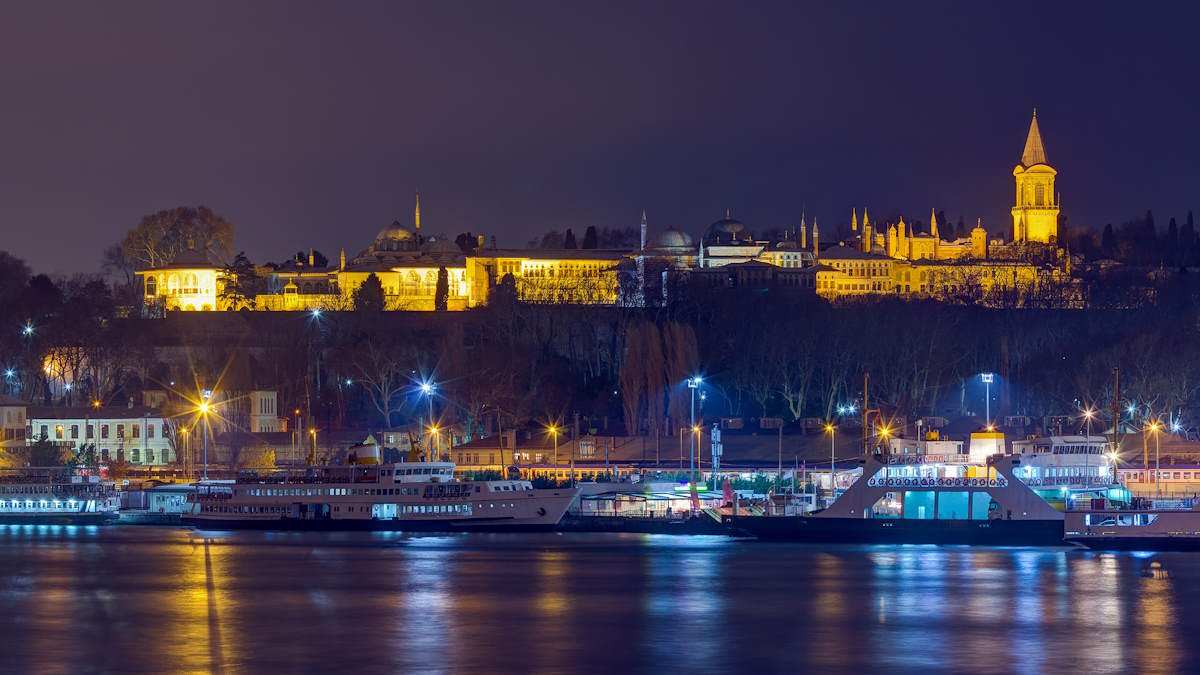
Related: Seven Hills of Istanbul
Münir Nurettin Selçuk’s Musical Interpretation
Yahya Kemal Beyatlı’s Bir Başka Tepeden was set to music by Münir Nurettin Selçuk (1900-1981), one of the most important composers and performers of 20th-century Turkish classical music. The composition, which begins with the words “Sana dün bir tepeden baktım aziz İstanbul”, is in the Hicaz makamı, a traditional Turkish musical mode known for its distinctive, expressive, and often deeply emotional character.
Selçuk had a particularly close artistic relationship with Yahya Kemal. He composed music for numerous poems by the poet, including several of his best-known works about Istanbul. Their artistic friendship helped bring together two complementary forms of expression: Yahya Kemal’s carefully crafted poetry and Selçuk’s sophisticated musical compositions.
In this particular composition, the Hicaz melody gives the poem an additional dimension of longing, affection, and nostalgia. Selçuk’s musical interpretation captures the emotional attachment to Istanbul expressed in the verses, making the poem even more memorable.
The result is more than a musical setting of a poem. It is a meeting of two great artists who shared a profound love for Istanbul, and whose combined work has become part of the city’s cultural heritage.
Yahya Kemal Beyatlı: Life and Legacy
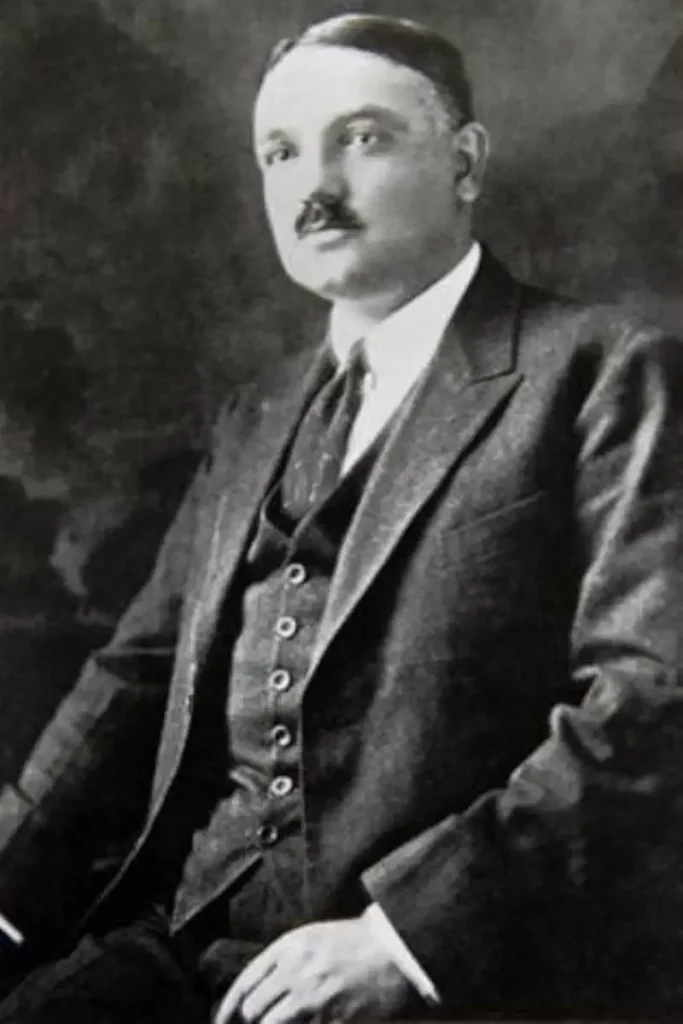
Yahya Kemal Beyatlı (1884-1958) was one of the most influential Turkish poets of the early 20th century. Born Ahmet Âgâh on December 2, 1884, in Skopje, then part of the Ottoman Empire, he grew up in a family with strong cultural and literary traditions. He later attended Vefa High School in Istanbul, but his education was interrupted by family difficulties and his involvement in political opposition to the Ottoman regime.
In 1903, at the age of 18, he moved to Paris, where he spent nearly a decade. During these years, he became familiar with European literature, particularly French Romanticism and the Parnassian poets. These influences shaped his literary outlook and encouraged him to develop a distinctive approach to Turkish poetry. He sought to combine the elegance and musicality of traditional Ottoman Divan poetry with modern literary sensibilities. For him, poetry was closely related to music, and rhythm, harmony, and the sound of words were as important as their meaning.
Returning to Istanbul in 1912, Beyatlı gradually established himself as a prominent literary figure. He taught at Istanbul University, where he became a professor of Western literature, and in 1921, he founded the literary magazine Dergâh together with fellow poet Ahmet Haşim. His poetry frequently explored Turkish history, cultural identity, nostalgia, and the beauty of Istanbul. His deep attachment to the city became one of the defining characteristics of his work.
Beyond literature, Beyatlı also pursued a career in public service. Following the establishment of the Republic of Turkey, he served as a member of parliament and held several diplomatic positions. He was appointed ambassador to Poland in 1926, Portugal in 1930, and Pakistan in 1947, becoming the first Turkish ambassador to that country.
His health deteriorated during his diplomatic service in Pakistan, and he returned to Turkey in 1949. He spent his remaining years in Istanbul, where he died on November 1, 1958, at the age of 73.
Yahya Kemal Beyatlı was buried at Aşiyan Cemetery, overlooking the Bosphorus in Istanbul. There is something particularly fitting about his final resting place. In his poem Bir Başka Tepeden, he wrote about those who lived, died, and were buried in Istanbul, describing their lives as the sweetest and longest dream. Having spent his final years in the city he loved so deeply, and now resting in its soil, Beyatlı himself became part of the very dream he so beautifully described.

Sources
- Yahya Kemal Beyatlı on Wikipedia
