
Among the many origin stories attached to Istanbul, few are as durable as the tale of Byzas and the “land of the blind.” According to the familiar version, Byzas, the legendary founder of Byzantium, consulted the Oracle at Delphi before establishing his colony. He was told to settle opposite the land of the blind. When he reached the Bosphorus and saw Chalcedon (today’s Kadıköy) already standing on the Asian shore, he concluded that its founders must have been blind, since they had failed to choose the superior site on the European side. He then founded Byzantium on the peninsula that would, centuries later, become Constantinople, and then Istanbul.
It is an elegant story, memorable, flattering to Byzantium, and perfectly suited to later narratives of imperial destiny. It is also, like many foundation legends, a blend of historical memory, retrospective interpretation, and political imagination.
Byzas, between legend and history
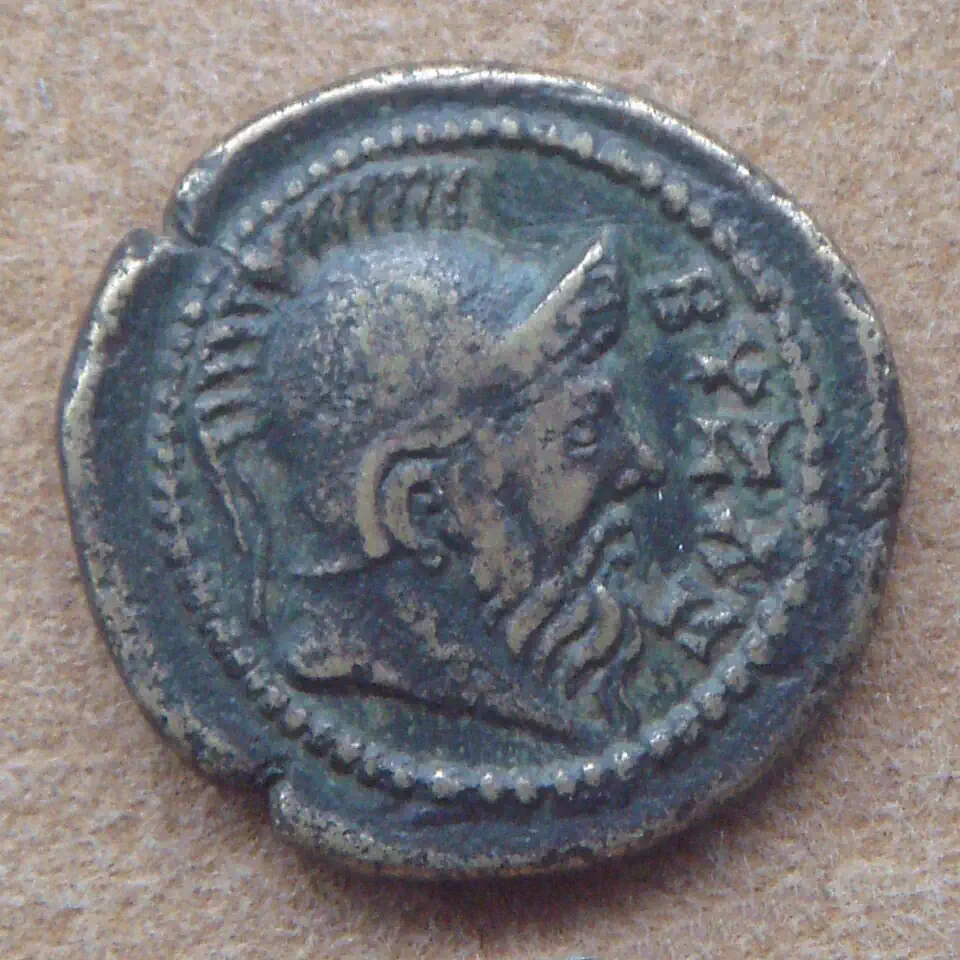
Byzas himself belongs more to the realm of legend than to securely documented biography. Ancient and later traditions consistently associate the founding of Byzantium with colonists from Megara, and the traditional date usually falls in the 7th century BCE, commonly around 667 BCE, while Chalcedon is generally treated as the earlier Megarian foundation on the opposite shore. The broad outline is ancient and well established, even if the figure of Byzas is not historically recoverable in the way a modern historian would wish.
Later Byzantine tradition elaborated the story further, attaching Byzas to mythic genealogies and heroic lineages. In some versions, he is linked to local nymphs and divine ancestry, which is entirely typical of ancient city foundation narratives. Such stories were not meant as modern biographies. They were a way of giving a city prestige, antiquity, and sacred legitimacy.
What did “blind” really mean?
The famous phrase about blindness is often presented as if it originated directly in a Delphic oracle, but the textual tradition is more complicated than popular retellings usually admit. Ancient authors preserve the idea that Chalcedon was known as the city of the blind because its site appeared inferior to that of Byzantium, yet the “blindness” motif also appears in connection with later commentary on the region’s geography and strategic logic. Britannica’s summary of Chalcedon, drawing on the classical tradition, notes that the site became known through Herodotean tradition as the “city of the blind” because Byzantium’s location across the strait seemed so much more advantageous.
That detail matters because it shifts the emphasis from a colorful anecdote to a serious geopolitical judgment. The issue was not aesthetic preference. It was a strategic position.
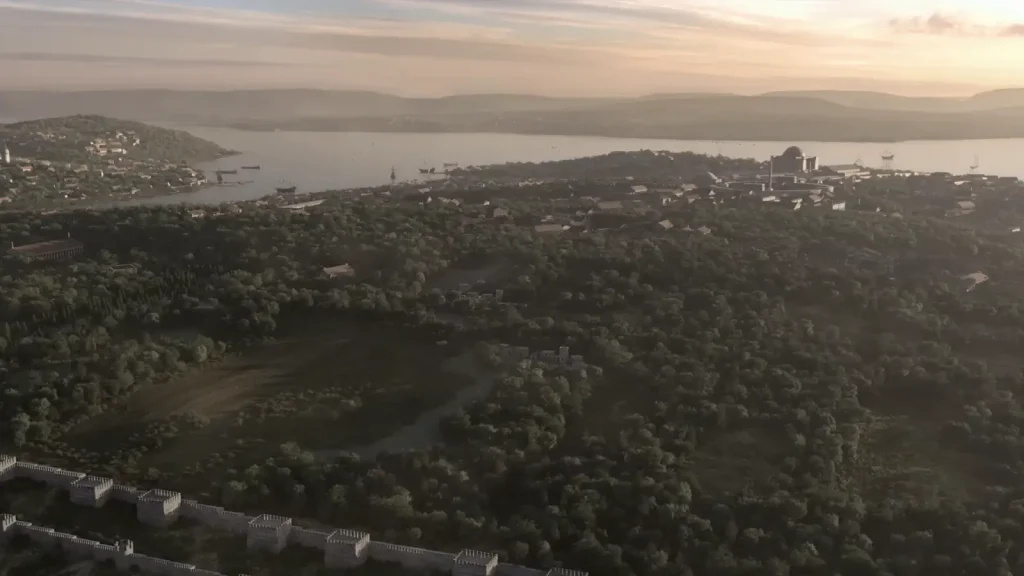
Byzantium occupied one of the most remarkable urban sites in the eastern Mediterranean. It stood at the meeting point of the Bosporus and the Sea of Marmara, effectively watching the passage between the Aegean world and the Black Sea. That position had commercial, naval, and military importance far beyond what a small Archaic colony could immediately exploit, but the potential was obvious. The site combined a defensible peninsula with exceptional control over maritime movement.
Why Chalcedon was not a foolish choice
Yet the standard version of the story can be misleading because it makes the settlers of Chalcedon sound absurdly incompetent. They were not.
For an early colony, the Asian shore offered rational advantages of its own. Access to fresh water, nearby agricultural land, and practical conditions for immediate settlement mattered enormously. A young colony did not begin by thinking like a later empire. It began by surviving. Byzantium’s site was strategically superior in the long run, but long-term strategic superiority does not always outweigh short-term practical needs when settlers first arrive. In that sense, the contrast between Chalcedon and Byzantium may reflect not blindness, but different priorities. One settlement favored immediate viability, the other a more ambitious command position over the straits. This is an inference from the geography and settlement pattern, rather than a verbatim ancient statement, but it fits the evidence well.
So the famous insult should not be taken too literally. It tells us more about how later writers valued imperial control than about the intelligence of early colonists.
The deeper problem with the founding myth
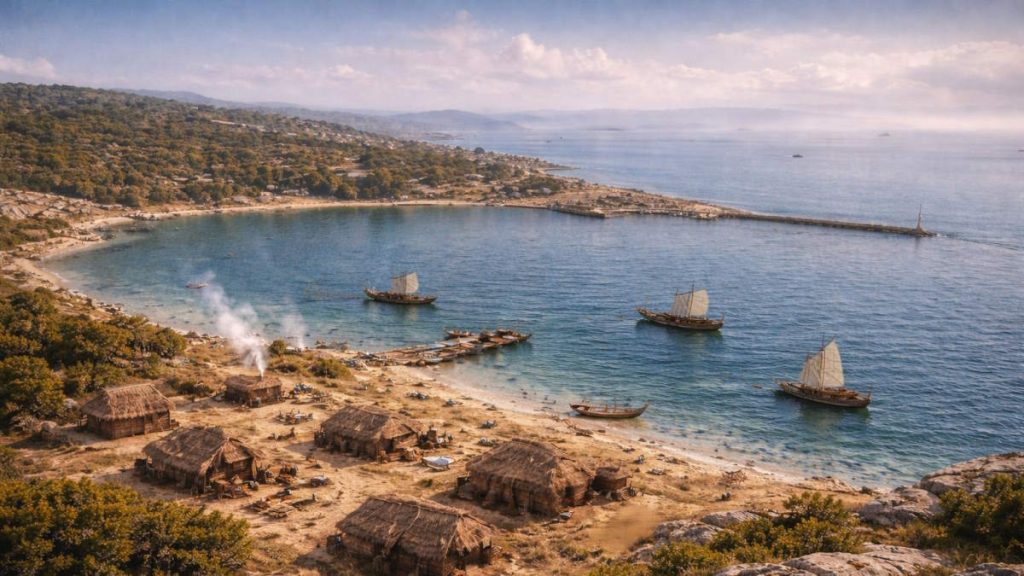
The legend becomes even less satisfactory when viewed in light of archaeology. Modern excavations have shown that the story of Istanbul cannot begin in the 7th century BCE as if the site had been empty until the Greeks arrived. The Yenikapı excavations pushed the known urban history of Istanbul back roughly 8,500 years, uncovering Neolithic settlement remains beneath later layers of the city. These discoveries included early habitation traces as well as a major harbor zone used in much later Byzantine periods.
This does not make the Greek foundation irrelevant. It remains historically decisive because Byzantium entered the textual record as a Greek polis and because that political identity shaped the city’s later trajectory. But it does mean that “founding” must be understood carefully. In many ancient cities, founding meant not the first human presence, but the moment when a settlement entered a new civilizational, political, and linguistic framework.
The same point is reinforced on the Asian side. Excavations around Haydarpaşa in Kadıköy have yielded substantial remains tied to ancient Chalcedon, including major finds that underline how deep and important the settlement history of that side of the Bosphorus really is. The so-called land of the blind (or the “city of the blind”) was not an empty or foolish margin. It was a significant habitation zone with a long history of its own.
A myth of superiority
What, then, is the “land of the blind” story really doing?
At one level, it is a neat etiological myth, a story designed to explain why Byzantium rose to greater fame than Chalcedon. At another level, it is a cultural claim. It suggests that the greatness of the future city was obvious from the beginning, as though history itself had always pointed toward Constantinople and then Istanbul. In that sense, the legend is not only about geography. It is about retrospective prestige.
This is why the story endured. Once Byzantium became Constantinople, and once Constantinople became one of the great capitals of world history, people naturally wanted its origins to look inevitable. The city’s later magnificence invited a founding story that combined divine sanction, strategic intelligence, and a touch of disdain for those who chose otherwise.
Byzas in a larger historical frame
The serious historical value of the legend lies not in whether Byzas literally heard the exact words “opposite the land of the blind,” but in what the story preserves about the ancient perception of place. Long before the Roman emperors, long before the Ottoman sultans, observers understood that this narrow hinge between seas and continents was unusual. The site could command movement, accumulate wealth, and support power on a scale out of proportion to its size. The later history of Constantinople confirmed that judgment with extraordinary force.
Even so, the myth becomes more interesting, not less, when stripped of its oversimplifications. Byzantium was not born in a vacuum. It emerged in a landscape already inhabited, already used, and already significant. Chalcedon was not founded by fools. It reflected one set of colonial calculations, while Byzantium reflected another. And Byzas, whether or not he existed as a single historical individual, represents the Greek moment in a much longer story of settlement, adaptation, and strategic vision around the Bosphorus.
Conclusion
The “land of the blind” remains a powerful legend because it compresses an enormous historical drama into one memorable image. But the real history is richer than the insult.
What made Byzantium great was not simply that one group of settlers saw what another had missed. It was that the Bosphorus itself offered different possibilities to different peoples across time, local communities, Greek colonists, Persian observers, Roman emperors, Byzantine rulers, and Ottoman sultans. The genius of the site was real. The blindness was mostly rhetorical.
And perhaps that is the most revealing thing about the story. It tells us not only how Byzantium was imagined at the beginning, but how later ages wanted to believe greatness begins: with a single flash of superior vision.

Sources
- Byzas on Wikipedia
- “Beyond the ‘Blind’ Myth: How Water Forged Istanbul’s Fate” on The Other Tour website
- Chalcedon (Kadıköy) on Wikipedia
